
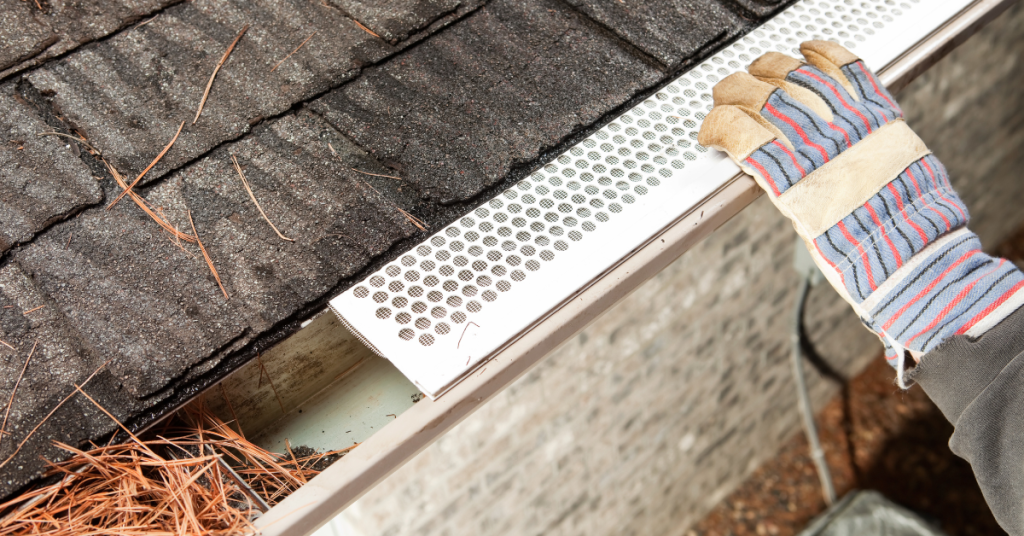
Climbing ladders twice a year to scoop rotting leaves from your gutters isn’t just unpleasant—it’s dangerous. Leaf guards promise to eliminate this chore forever, but before investing in a gutter protection system, Minnesota homeowners need answers: Do they actually work? When do they make sense? And how do you choose the right system?
How Leaf Guards Work: The Basics
Leaf guards create a protective barrier over your gutters that keeps debris out while allowing water to flow through freely. The system prevents leaves, pine needles, seed pods, and other debris from clogging your gutters, ensuring proper water drainage away from your home’s foundation.
Key benefits include:
- Eliminates manual gutter cleaning for most homeowners
- Prevents water damage to foundations and landscaping
- Reduces ice dam formation during Minnesota winters
- Extends gutter lifespan by preventing standing water and rust
- Eliminates ladder-related injury risks
The effectiveness depends heavily on choosing the right system for your specific situation and ensuring professional installation.
Four Main Types of Leaf Guard Systems Explained
Micro-Mesh Guards: Feature surgical-grade stainless steel mesh with microscopic holes that block all debris while maximizing water flow. Best for homes with heavy tree coverage and small debris like pine needles. Highest performance but premium investment.
Reverse Curve Guards: Use surface tension to guide water into the gutter while debris slides off the curved edge. Excellent for heavy leaf fall from large trees. May require occasional debris removal from the top surface.
Foam Insert Guards: Fit inside existing gutters and filter water through porous material while blocking debris. Most affordable option but requires replacement every few years as foam degrades.
Brush Guards: Resemble large pipe cleaners sitting inside gutters, catching debris while water flows underneath. Budget-friendly choice but needs annual cleaning to remove trapped debris.
Six Red Flags That You Need Leaf Guards Now
Watch for these warning signs that indicate leaf guards would significantly benefit your home:
Overflowing gutters during rain: Water cascading over gutter edges means clogs are redirecting water incorrectly, potentially damaging siding, windows, and foundations.
Foundation cracks or basement moisture: When gutters don’t drain properly, water pools around your foundation, causing cracks, leaks, and structural issues requiring expensive repairs.
Multiple cleanings required annually: If you’re cleaning gutters three or more times per year, the ongoing time and expense makes leaf guards financially sensible.
Visible sagging or pulling away: Debris weight and standing water cause gutters to separate from fascia boards, requiring repairs that leaf guards would prevent.
Ice dams forming in winter: Clogged gutters prevent snowmelt drainage, causing ice to back up under shingles and leak into your home.
Safety concerns with ladder access: Two-story homes, steep roofs, or physical limitations make ladder work dangerous—leaf guards eliminate this risk entirely.
Step-by-Step: Evaluating If Leaf Guards Make Sense for Your Home
Step 1: Assess your tree coverage. Walk your property and identify trees within 50 feet of your home. Mature oaks, maples, and evergreens that drop heavy debris make leaf guards highly beneficial.
Step 2: Calculate current maintenance costs. Document how many times you cleaned gutters last year and whether you hired professionals or risked DIY ladder work. Multiply annual cleanings by professional service costs to establish your baseline expense.
Step 3: Inspect current gutter condition. Check for rust, holes, sagging sections, or improper pitch. Damaged gutters need replacement before adding guards—factor this into your decision.
Step 4: Consider your home’s height and accessibility. Single-story homes with easy roof access present less risk for DIY maintenance. Multi-story homes or steep pitches make professional leaf guards more valuable.
Step 5: Evaluate your long-term plans. If you’re staying in your home for five or more years, leaf guards provide better return on investment through accumulated savings and prevented damage.
Step 6: Get professional assessments. Contact licensed contractors for free inspections to understand system recommendations specific to your home’s configuration and tree coverage.
What Leaf Guards Don’t Do: Setting Realistic Expectations
No gutter protection system is completely maintenance-free. Understanding limitations prevents disappointment:
Annual surface cleaning still necessary: Small debris, shingle grit, and pollen accumulate on top of guards. Plan for yearly hosing or brushing to maintain optimal performance.
Ice formation isn’t completely eliminated: Minnesota winters still produce ice, though properly functioning leaf guards significantly reduce ice dam risks compared to clogged gutters.
Existing gutter damage requires separate repair: Leaf guards protect against debris but won’t fix rust, holes, improper pitch, or fascia damage from previous neglect.
Storm debris needs occasional removal: Large branches, clusters of seed pods, or unusual weather events may require periodic checks and manual removal from guard surfaces.
Professional installation strongly recommended: DIY installation often voids warranties and risks improper pitch, gaps, or inadequate fastening that compromises performance.
How to Choose the Right System for Minnesota’s Climate
Minnesota’s extreme weather demands specific system characteristics:
For heavy leaf coverage from deciduous trees: Micro-mesh systems provide superior protection against maple leaves, oak debris, and seed pods that plague Minnesota yards each fall.
For pine needles and small debris: Choose guards with the smallest openings possible. Standard screen systems allow pine needles through, while micro-mesh blocks everything.
For winter ice and snow loads: Select aluminum or stainless steel systems rated for heavy snow. Plastic guards crack under Minnesota’s freeze-thaw cycles and heavy snow accumulation.
For high water volume: Spring snowmelt and summer storms require systems with high flow rates. Verify the system handles Minnesota’s typical peak rainfall intensity without overflow.
For temperature extremes: Professional installation must account for expansion and contraction between summer heat and winter cold. Improper fastening leads to separation and gaps.
When to Call a Professional vs. DIY Installation
Choose professional installation when:
- Your home is two stories or has steep roof pitch creating safety hazards
- You want manufacturer warranty protection, which DIY installation voids
- Existing gutters show damage, improper pitch, or fascia problems
- You’re investing in premium micro-mesh systems requiring precise installation
- Your home has complex rooflines with valleys, dormers, or multiple levels
Consider DIY only when:
- You have extensive handyman experience and proper safety equipment
- Your home is single-story with easy, safe roof access
- You’re choosing basic snap-in systems for temporary solutions
- You understand that warranty protection won’t apply
- You’re willing to redo installation if performance issues arise
The Bottom Line: Your Decision Framework
Leaf guards make excellent financial and practical sense if:
- You have significant tree coverage requiring multiple annual cleanings
- Your home is two-story or has difficult roof access
- You’ve experienced foundation damage, ice dams, or gutter overflow issues
- You’re planning to stay in your home for five or more years
- Safety concerns or physical limitations make ladder work risky
Skip leaf guards if:
- Your property has minimal trees and gutters rarely clog
- You have a single-story home with safe, easy gutter access
- You’re comfortable cleaning gutters twice yearly
- You’re planning to move within the next few years
- Your current gutters need complete replacement anyway
Next Steps: Getting Started with Leaf Guard Installation
Immediate action items:
- Document your current situation by photographing gutters, noting overflow areas, and counting nearby trees
- Calculate annual gutter cleaning frequency and associated costs to establish your baseline
- Schedule free inspections with multiple licensed contractors to compare system recommendations
- Request detailed explanations of why specific systems suit your home’s tree coverage and roof configuration
- Verify contractor licensing, insurance, and manufacturer certifications before committing
- Ask about warranty coverage, including both product defects and installation workmanship
For Minnesota homeowners in Savage and surrounding areas, Exteriors Plus provides free, no-obligation inspections and leaf guard consultations. Their experienced team evaluates your specific situation, tree coverage, and gutter condition to recommend the most appropriate protection system. As a Star Tribune award-winning contractor with extensive Minnesota experience, they understand our unique climate challenges. Contact Exteriors Plus at (952) 345-3408 to schedule your free consultation and protect your home from water damage year-round.
