
Attic Ventilation Service
CALL US FOR ATTIC VENTILATION SERVICE!
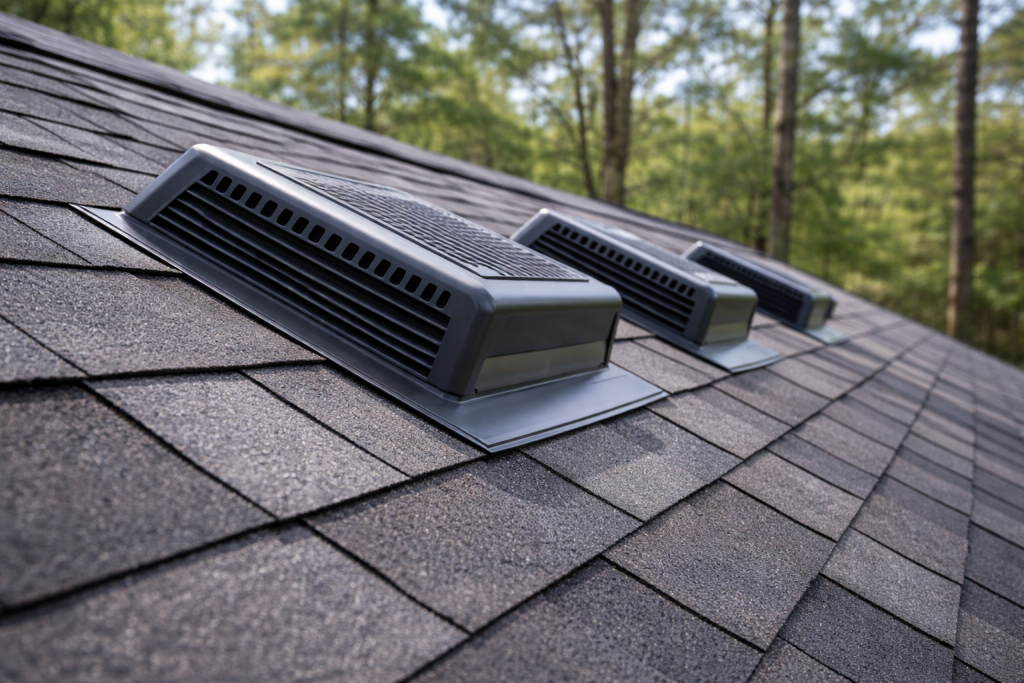
Poor attic ventilation is one of the most overlooked causes of premature roof failure.
When your attic traps heat and moisture, it creates the conditions for shingle breakdown, wood rot, ice dams, and skyrocketing energy bills — often years before a single leak shows up. The damage is silent, consistent, and expensive.
The good news: it’s also preventable.
What Attic Ventilation Actually Does
Attic ventilation isn’t just about air movement — it’s about creating a continuous exchange between outside air and the air trapped in your attic space. A properly ventilated attic pulls cool, dry air in through the soffits (low points) and exhausts hot, humid air out through ridge vents or roof vents (high points).
This intake-to-exhaust cycle does three things:
- Regulates temperature — keeping your attic from becoming an oven in summer
- Controls moisture — pushing out humid air before it condenses on wood
- Protects your roof deck — reducing the heat and dampness that break down materials over time
Without this airflow, your attic becomes a slow-cooking environment that damages your roof from the inside out.
Heat Buildup: The Silent Shingle Killer
On a hot Minnesota summer day, an unventilated attic can reach temperatures above 150°F. That extreme heat radiates directly into your shingles from below, accelerating the breakdown of the asphalt and granules that protect your home.
What this looks like over time:
- Shingles curl, crack, or blister prematurely
- Granules shed faster, showing up in your gutters
- Manufacturers’ warranties are voided — most explicitly require adequate ventilation
- A 20-year shingle may only last 12–15 years
The heat you can’t see is doing more damage than the weather you can.
Moisture Damage: Especially Dangerous in Minnesota Winters
In cold climates, poor ventilation creates a second problem: condensation. When warm, moist air from your living spaces rises into a cold, poorly ventilated attic, it hits cold surfaces and turns to water. Over months and years, that moisture causes:
- Wood rot in rafters and sheathing
- Mold growth on attic insulation and framing
- Ice dams — a major Minnesota issue, where heat escaping through the roof melts snow unevenly, refreezes at the eaves, and forces water under shingles
Ice dams alone can cause thousands of dollars in interior water damage. In many cases, the root cause isn’t the storm — it’s a ventilation problem that was never addressed.
Warning Signs Your Attic Isn't Ventilating Properly
Watch for these red flags:
- Unusually high summer cooling bills
- Ice dams forming at your roof’s edge in winter
- Frost or condensation visible on attic surfaces
- Musty or moldy smell in the attic
- Shingles that are curling or aging faster than expected
- Soffit vents that are blocked by insulation or debris
If you notice two or more of these, it’s time to have a contractor take a look.
Does Better Ventilation Improve Energy Efficiency?
Yes — and significantly. When your attic stays closer to outdoor temperatures (rather than becoming a heat trap), your air conditioner doesn’t have to work as hard to cool your home. Proper ventilation can reduce attic temperatures by 30–50°F on peak summer days, which translates directly into lower energy usage and more consistent indoor comfort.
It’s one of the highest-ROI improvements a homeowner can make — and most don’t know it exists.
When to Call a Roofing Contractor
Contact a professional if:
- You’ve never had your attic ventilation inspected
- Your home is more than 15 years old
- You’ve experienced ice dams or visible moisture damage
- You’re planning a roof replacement (ventilation should always be evaluated at the same time)
A contractor should calculate your ventilation ratio based on attic square footage — the standard is 1 square foot of net free vent area for every 150 square feet of attic floor space.
Bottom Line
Your roof takes the hit for whatever goes wrong in your attic. Trapped heat breaks down shingles. Trapped moisture rots the structure. Both problems shorten your roof’s life and raise your energy costs. Proper attic ventilation is the fix — and it’s far less expensive than a premature roof replacement.
Next Steps: If you’re in the Minneapolis–St. Paul area or anywhere across Minnesota, contact Exterior Plus for a professional attic ventilation inspection. We’ll assess your current setup, identify any airflow gaps, and recommend the right solution for your home — before a small problem becomes a big repair.