
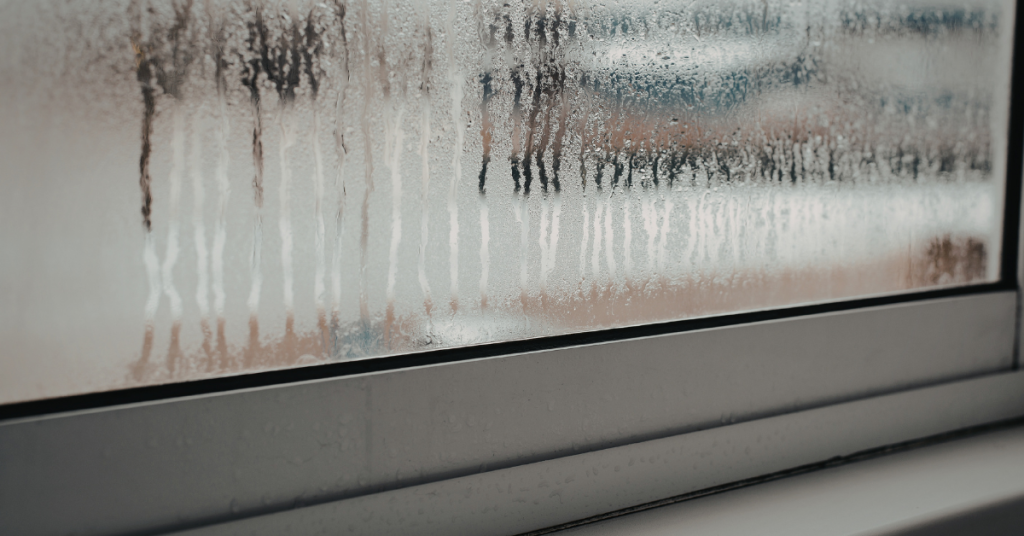
Direct Answer: Interior window frost forms when warm, moist air inside your home contacts glass surfaces cold enough to freeze that moisture. This typically signals one of two problems: your windows aren’t insulating properly, or your indoor humidity levels are too high. In Minnesota winters, even small insulation failures create glass surfaces cold enough to produce frost—a clear warning sign that shouldn’t be ignored.
The Science Behind Interior Window Frost
Understanding why frost forms helps you diagnose the underlying problem.
Warm indoor air holds moisture (humidity). When that air contacts a surface at or below 32°F, the moisture condenses and freezes instantly, creating frost or ice. Your windows become the coldest surfaces in your home during Minnesota winters because they’re the thinnest barrier between heated indoor air and sub-zero outdoor temperatures.
Well-insulated windows keep interior glass surfaces warm enough—typically above 40°F—to prevent frost formation under normal humidity conditions. When frost appears, either the glass is getting too cold (insulation failure) or the air contains too much moisture (humidity problem)—or both.
Window Insulation Failure: The Primary Culprit
In most cases, interior frost indicates your windows have lost insulating capacity.
Signs the window itself is failing:
- Frost appears even when indoor humidity is normal (30-40%)
- Only certain windows develop frost while others stay clear
- Frost forms in the same spots repeatedly
- You also notice drafts or cold air near affected windows
- Fog or haze appears between glass panes
What causes insulation failure:
- Seal breakdown allowing insulating gas to escape
- Single-pane or older double-pane construction
- Damaged or deteriorated weatherstripping
- Warped frames creating gaps
- Age—windows over 15-20 years commonly show declining performance
When window insulation fails, the interior glass surface drops close to outdoor temperatures. In Minnesota, where January nights regularly hit -10°F to -20°F, failed windows can have interior glass surfaces near or below freezing—guaranteeing frost formation at any reasonable humidity level.
High Indoor Humidity: The Other Factor
Sometimes windows function properly, but excessive indoor moisture overwhelms their capacity.
Signs humidity is the main issue:
- Frost appears on all windows, not just specific ones
- Condensation also forms on mirrors, cold pipes, and exterior walls
- Home feels damp or stuffy
- Humidity readings exceed 40% during cold weather
Common humidity sources in Minnesota homes:
- Cooking without proper ventilation
- Long hot showers without exhaust fans
- Multiple occupants (breathing adds moisture)
- Houseplants in large numbers
- Firewood stored indoors
- Clothes drying inside
- Humidifiers set too high
- Poor bathroom and kitchen ventilation
Minnesota’s tight, energy-efficient home construction—while great for heating costs—often traps moisture inside. Older homes with more air leakage rarely have humidity problems; newer, well-sealed homes frequently do.
How to Diagnose Your Specific Problem
Follow this process to determine whether windows or humidity are causing your frost:
Step 1: Check Your Humidity Level Purchase an inexpensive hygrometer ($10-$20 at hardware stores). During Minnesota winters, indoor humidity should stay between 25-35% when outdoor temperatures drop below 0°F.
Step 2: Compare Windows Do all windows frost equally, or only certain ones? Isolated frost points to specific window failure. Universal frost suggests humidity issues.
Step 3: Inspect Problem Windows Look for fog between panes, feel for drafts, check frame condition. These indicate window-specific problems.
Step 4: Evaluate Ventilation Are bathroom and kitchen exhaust fans working? Do you run a humidifier? Have you recently changed habits that add moisture?
Recommended Indoor Humidity Levels for Minnesota Winters
Proper humidity management prevents frost while maintaining comfort:
| Outdoor Temperature | Maximum Indoor Humidity |
| 20°F to 40°F | 40% |
| 0°F to 20°F | 35% |
| -10°F to 0°F | 30% |
| -20°F to -10°F | 25% |
| Below -20°F | 20% |
These levels prevent frost on properly functioning windows. If frost forms at these humidity levels, your windows need attention.
Solutions for Humidity-Related Frost
If excessive moisture is causing frost, these steps help:
- Run exhaust fans during and 15-20 minutes after cooking and showering
- Reduce humidifier settings as outdoor temperatures drop
- Improve ventilation by briefly cracking windows during mild periods
- Use a dehumidifier in problem areas
- Move houseplants away from windows
- Store firewood outdoors rather than inside
- Check dryer venting to ensure it exhausts outside properly
Solutions for Window-Related Frost
When windows themselves are failing, options include:
Short-term measures:
- Apply interior window insulation film (temporary fix)
- Install cellular shades for additional insulation
- Use draft stoppers along window sills
- Apply weatherstripping to operable windows
Long-term solutions:
- Replace failed sealed glass units
- Upgrade to energy-efficient windows with lower U-Factors
- Install storm windows over existing single-pane windows
- Full window replacement with cold-climate rated units
For Minnesota homes, window replacement often makes more financial sense than repeated temporary fixes, especially when multiple windows show frost problems.
Red Flags Requiring Immediate Professional Attention
Some frost situations indicate serious problems:
- Ice buildup thick enough to drip water when melting
- Frost extending onto window frames or surrounding walls
- Mold or mildew appearing near chronically frosted windows
- Wood rot or paint damage around window frames
- Frost forming on walls or in corners (indicates major insulation failure beyond windows)
Water damage from repeated frost cycles can harm wall structures, promote mold growth, and cause expensive repairs if left unaddressed.
The Bottom Line
Interior window frost signals either failing window insulation or excessive indoor humidity—often a combination of both. Start by measuring your home’s humidity levels and comparing which windows frost and which stay clear.
If frost appears only on specific windows at reasonable humidity levels, those windows have lost insulating capacity and likely need replacement. If all windows frost and humidity runs high, address moisture sources first.
For Minnesota homes, windows over 15 years old that regularly frost during cold snaps are telling you they’ve reached the end of their effective lifespan.
Next Steps
Purchase a hygrometer to monitor humidity levels, then document which windows develop frost during the next cold snap. This information helps professionals diagnose whether you need humidity management, targeted window repairs, or comprehensive window replacement.
For a professional window assessment in the Twin Cities area, contact Exteriors Plus at (952) 345-3408. Our team can evaluate your windows’ thermal performance, identify insulation failures, and recommend solutions matched to Minnesota’s demanding climate. Schedule a free consultation to determine the most effective path to frost-free windows this winter.
