
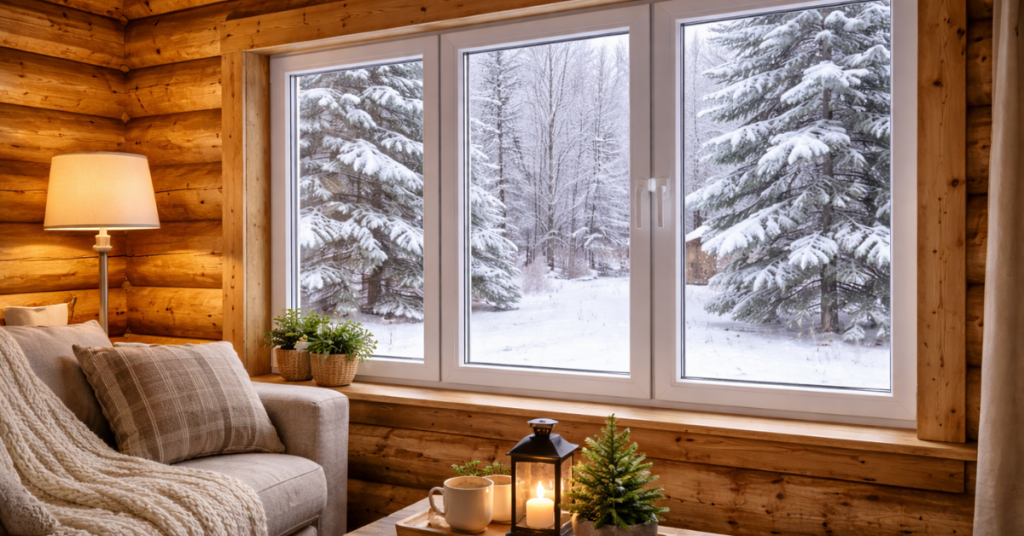
Direct Answer: Yes, vinyl windows perform exceptionally well in Minnesota’s harsh winters. Quality vinyl resists moisture damage, handles extreme temperature swings without warping, provides natural insulation, and requires virtually no maintenance—making it one of the most practical and cost-effective frame materials for cold-climate homes. Modern vinyl formulations have overcome early limitations, delivering durability and thermal performance that rivals or exceeds more expensive alternatives.
Why Vinyl Excels in Cold Climates
Vinyl’s material properties align perfectly with Minnesota’s demanding weather conditions.
Moisture resistance: Unlike wood, vinyl doesn’t absorb water, rot, or develop mold. This matters tremendously when snow accumulates on window sills, ice forms along frames, and condensation develops during temperature transitions. Vinyl simply sheds moisture without degradation.
Thermal stability: Quality vinyl maintains structural integrity across Minnesota’s 100+ degree temperature range—from -30°F winter nights to 90°F summer afternoons. While all materials expand and contract with temperature changes, vinyl does so predictably without cracking, warping, or seal damage.
Natural insulation: Vinyl frames insulate significantly better than aluminum and comparably to wood. The hollow chambers within vinyl profiles can be filled with foam insulation, further boosting thermal performance.
Zero maintenance: Vinyl never needs painting, staining, or sealing. It won’t peel, chip, fade significantly, or require periodic refinishing—eliminating ongoing maintenance costs that other materials demand.
Vinyl vs. Other Frame Materials for Minnesota
Vinyl vs. Aluminum Aluminum conducts heat approximately 1,000 times faster than vinyl. In Minnesota winters, aluminum frames become cold bridges, transferring frigid outdoor temperatures directly to interior surfaces, causing condensation, frost formation, and significant heat loss.
Vinyl vs. Wood Wood offers excellent natural insulation and classic aesthetics. However, Minnesota’s moisture-heavy environment challenges wood frames constantly. Without diligent maintenance (painting every 3-5 years, regular inspection, prompt repairs), wood frames deteriorate and rot.
Vinyl vs. Fiberglass Fiberglass represents the premium option—strongest, most stable, longest-lasting frame material available. It expands and contracts at rates nearly identical to glass, reducing seal stress. However, fiberglass costs significantly more than vinyl. For most Minnesota homeowners, this premium doesn’t justify the incremental performance gain.
Frame Material Comparison for Cold Climates
| Material | Thermal Performance | Moisture Resistance | Maintenance | Lifespan |
| Vinyl | Excellent | Excellent | None | 20-30 years |
| Fiberglass | Excellent | Excellent | Minimal | 40+ years |
| Wood | Excellent | Poor without maintenance | High | 30+ years if maintained |
| Aluminum | Poor | Excellent | Low | 25-30 years |
For Minnesota’s combination of extreme cold and moisture exposure, vinyl delivers the optimal balance for most homeowners.
What Separates Quality Vinyl from Cheap Vinyl
Not all vinyl windows perform equally. Understanding quality indicators prevents disappointment.
Signs of quality vinyl construction:
- Virgin vinyl compound — New material rather than recycled vinyl, which can be brittle
- Titanium dioxide additive — Provides UV resistance preventing yellowing
- Multi-chamber frame design — Multiple hollow chambers improve insulation and strength
- Fusion-welded corners — Corners melted together rather than mechanically fastened
- Heavy wall thickness — Minimum 0.080 inches indicates durability
- Metal reinforcement — Steel or aluminum inserts in larger windows prevent sagging
Red flags indicating inferior vinyl:
- Mechanically fastened corners rather than fusion-welded
- Thin, flimsy feeling frames
- Single-chamber frame construction
- No brand name or warranty documentation
Vinyl Window Specifications for Minnesota
When shopping for vinyl windows, these specifications ensure cold-climate performance:
U-Factor: 0.25 or lower — Measures total heat transfer. Quality vinyl windows with double-pane Low-E glass easily achieve this threshold.
Energy Star Northern Zone Certification — Confirms the window meets efficiency standards for extreme cold climates.
Air infiltration rating: 0.30 CFM or lower — Measures air leakage through closed windows. Quality vinyl achieves 0.10-0.20 CFM.
Common Concerns About Vinyl—Addressed
“Vinyl looks cheap” Modern vinyl offers diverse colors, woodgrain textures, and architectural details matching most home styles. Quality vinyl windows are virtually indistinguishable from painted wood at normal viewing distances.
“Vinyl fades and yellows” Quality vinyl with titanium dioxide UV inhibitors resists fading and yellowing for 20+ years. Budget vinyl without proper additives does degrade—choose reputable manufacturers.
“Vinyl warps in extreme temperatures” Quality vinyl rated for northern climates handles Minnesota’s temperature extremes without warping. Problems occur with inferior products or improper installation.
When Vinyl May Not Be Ideal
Despite vinyl’s advantages, certain circumstances favor alternatives:
- Historic homes requiring period-accurate details — Wood or wood-clad windows may be necessary for historical preservation
- Extremely large window openings — Fiberglass provides better structural support for oversized units
- Homeowners prioritizing 40+ year lifespan — Fiberglass offers longer service life
For most Minnesota residential applications, however, vinyl represents the optimal choice.
The Bottom Line
Vinyl windows excel in Minnesota’s cold climate, offering moisture resistance, thermal stability, excellent insulation, and zero maintenance. Quality vinyl with proper specifications—U-Factor 0.25 or lower, fusion-welded corners, multi-chamber construction—delivers 20-30 years of reliable performance through our harshest winters.
Avoid budget vinyl lacking proper UV inhibitors and quality construction. The difference between quality and cheap vinyl becomes painfully apparent after a few Minnesota winters.
Next Steps
Identify your priorities—maximum efficiency, specific aesthetics, or budget constraints—then evaluate vinyl options meeting cold-climate specifications. Request samples to assess quality indicators: corner welds, wall thickness, and chamber construction.
For expert guidance on vinyl window selection for your Minnesota home, contact Exteriors Plus at (952) 345-3408. As Star Tribune Minnesota’s Best award winners for window services, we help homeowners choose vinyl windows engineered for our demanding climate. Schedule a free consultation to compare options and find the best fit for your home.
