
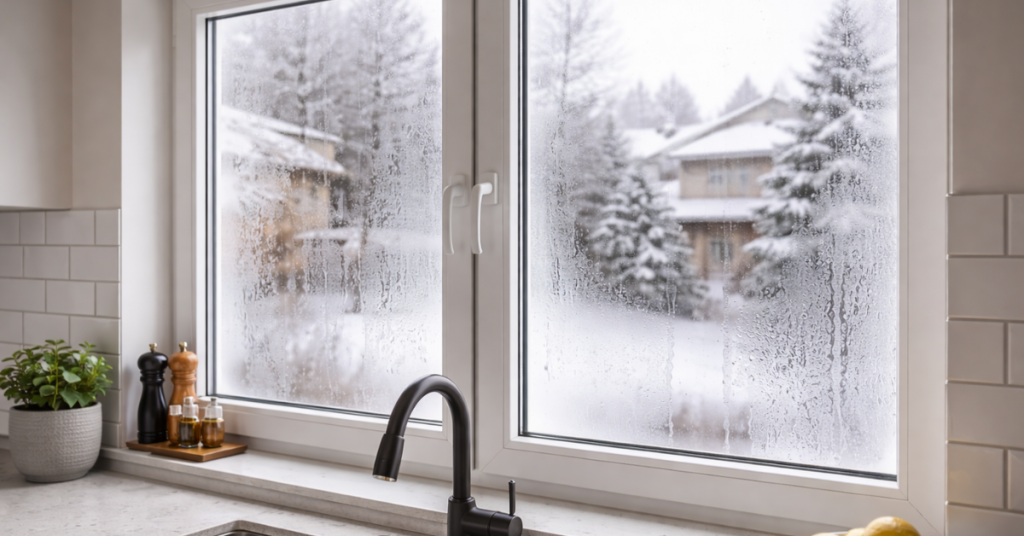
Direct Answer: Fog or haze trapped between glass panes indicates seal failure in your window’s insulated glass unit (IGU). Once the seal breaks, the insulating gas escapes and moisture enters, permanently compromising thermal performance. Foggy windows typically lose 30-50% of their insulating capacity and usually require glass unit replacement or full window replacement—repairs cannot restore the failed seal.
How Window Seals Work—And Why They Fail
Modern double and triple-pane windows contain sealed units filled with insulating gas (argon or krypton) between glass layers. This gas insulates far better than air, and the airtight seal keeps moisture out while trapping the gas inside.
When seals fail, two things happen simultaneously: insulating gas escapes and humid air enters. The moisture in that air condenses when temperatures change, creating the fog you see between panes. This fog may appear and disappear with weather conditions, but the underlying seal damage is permanent.
Common causes of seal failure:
- Age — Most seals last 15-25 years before natural deterioration occurs
- Thermal stress — Minnesota’s extreme temperature swings repeatedly expand and contract seal materials
- UV exposure — Sunlight degrades seal compounds over time; south and west-facing windows fail faster
- Manufacturing defects — Poor quality seals may fail within 5-10 years
- Improper installation — Incorrect handling or installation damages seals from the start
- Physical stress — Home settling, pressure washing, or impact can compromise seals
Signs Your Window Seal Has Failed
Fog between panes is the most obvious indicator, but other signs confirm seal failure:
- Condensation that won’t wipe away — Moisture trapped inside cannot be cleaned from either surface
- Hazy or cloudy appearance — Mineral deposits left behind as moisture repeatedly evaporates
- Distorted views — Failed seals sometimes cause glass to bow slightly inward
- Interior glass feeling colder — Lost insulating gas means reduced thermal protection
- Fog appearing and disappearing — Moisture responds to temperature and humidity changes
- White or milky residue — Mineral buildup between panes that never clears
If you notice fog in one window, inspect others of similar age and orientation. Seal failures often occur in clusters as windows installed together age simultaneously.
Why Foggy Windows Can’t Be Repaired
Some companies advertise “defogging” services that drill holes into the glass unit, remove moisture, and reseal the holes. While this temporarily clears the fog, it doesn’t solve the underlying problem.
Why defogging fails long-term:
- The original seal remains broken—moisture will return
- Insulating gas cannot be restored—thermal performance stays compromised
- Drilled holes create additional weak points
- Results typically last only 1-3 years before fog returns
- You pay for a temporary fix while still needing eventual replacement
Defogging might make sense for a window you plan to replace within a few years anyway, but it’s not a permanent solution.
The Real Cost of Ignoring Foggy Windows
Beyond the aesthetic annoyance, foggy windows create practical problems.
Energy loss: Failed seals mean lost insulating gas. Your window now performs closer to single-pane glass, allowing significantly more heat transfer. In Minnesota winters, this translates to noticeably higher heating bills and cold spots near affected windows.
Progressive damage: Moisture trapped between panes doesn’t just cause fog. Over time, it etches glass surfaces, deposits minerals permanently, and can damage frame components. The longer you wait, the worse the damage becomes.
Reduced home value: Foggy windows signal deferred maintenance to potential buyers. Home inspectors flag failed seals, potentially affecting sale negotiations.
Comfort issues: Windows with failed seals feel noticeably colder, create drafts through convection currents, and may develop frost during extreme cold.
Your Options: Glass Replacement vs. Full Window Replacement
When seals fail, you have two primary choices.
Insulated glass unit (IGU) replacement:
- Replaces only the glass unit while keeping existing frames
- Works well when frames remain in good condition
- Typically costs 40-60% less than full replacement
- Makes sense for windows under 15 years old with solid frames
- Requires frames designed for IGU replacement (not all are)
Full window replacement:
- Replaces entire window including frame, sash, and glass
- Best choice when frames show wear, damage, or age
- Allows upgrading to better efficiency ratings
- Makes sense for windows over 15-20 years old
- Provides longest-lasting solution with full warranty
Decision framework:
| Situation | Recommended Action |
| Window under 10 years, solid frame | IGU replacement |
| Window 10-15 years, good condition | IGU replacement or full replacement |
| Window 15+ years old | Full replacement |
| Multiple windows failing | Full replacement (better value) |
| Frame damage visible | Full replacement |
| Single failed window among newer units | IGU replacement |
Red Flags Requiring Prompt Attention
Some foggy window situations demand faster action:
- Fog accompanied by visible frame rot or damage
- Moisture stains on walls or sills below windows
- Mold growth near affected windows
- Multiple windows showing fog simultaneously
- Fog in windows less than 10 years old (possible warranty claim)
- Interior frost forming during cold weather
These signs indicate either accelerated deterioration or conditions that could cause secondary damage to your home.
Checking for Warranty Coverage
Before paying for repairs, check whether your windows remain under warranty.
Most quality windows include 10-20 year seal warranties, with some manufacturers offering lifetime coverage. Gather documentation including purchase receipts, installation records, and warranty paperwork. Even without paperwork, manufacturers can sometimes verify coverage using your address and approximate installation date.
Failed seals on relatively new windows often indicate manufacturing defects covered under warranty. It’s worth investigating before assuming you’ll pay out of pocket.
The Bottom Line
Fog between window panes means seal failure—a permanent condition that eliminates your window’s insulating effectiveness. While the fog itself is mostly cosmetic, the energy loss, comfort reduction, and potential for progressive damage make addressing failed seals worthwhile.
For newer windows with sound frames, glass unit replacement offers a cost-effective solution. For windows approaching or past 15-20 years, full replacement typically provides better long-term value, especially when multiple units show failure.
Next Steps
Document which windows show fogging and note their approximate age and orientation. Check for warranty coverage before scheduling repairs. Inspect frames around foggy windows for signs of moisture damage or deterioration.
For professional assessment of foggy windows in your Twin Cities home, contact Exteriors Plus at (952) 345-3408. Our team can evaluate whether glass unit replacement or full window replacement offers the best solution for your situation. As Star Tribune Minnesota’s Best award winners, we help homeowners restore window performance efficiently. Schedule a free consultation to explore your options.
