
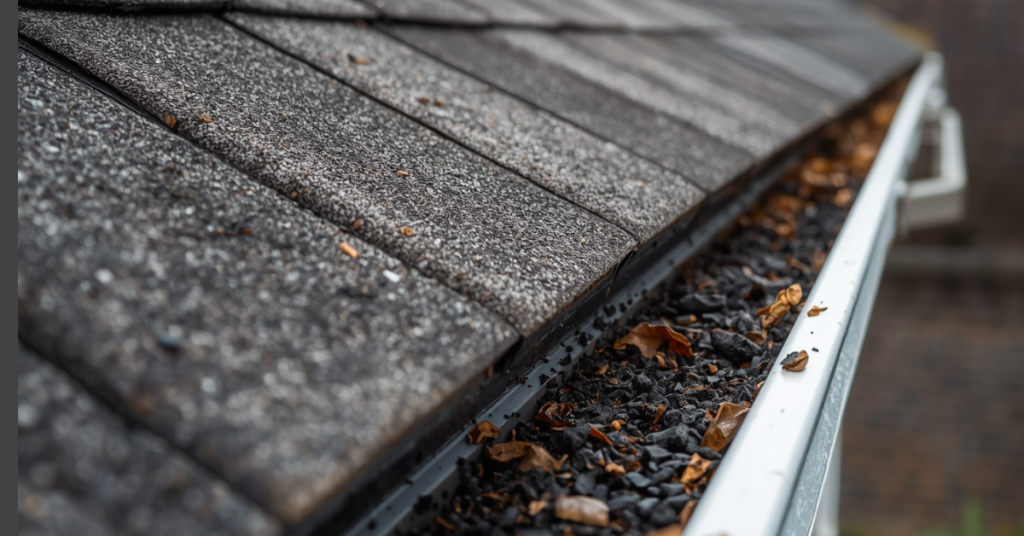
If you cleaned your gutters this spring and noticed what looks like coarse black sand piling up at the downspout, your roof is sending you a message. Shingle granules in your gutters are one of the clearest early indicators that your roofing system is aging, damaged, or both. Here is what it means and what to do about it.
What Are Shingle Granules — And Why Are They in Your Gutters?
The top layer of every asphalt shingle is coated with small mineral granules. These granules serve three critical jobs: they protect the asphalt from UV rays, add fire resistance, and give your roof its color. When shingles age or take a beating from weather, those granules loosen and wash down the roof slope into your gutters.
A small amount of granule loss is normal, especially on a newly installed roof during the first year. But if you are seeing visible piles this spring, something more serious is happening up top.
Why Minnesota Winters Accelerate Granule Loss
Minnesota roofs take a harder beating than most. Between November and March, your shingles endure:
- Freeze-thaw cycles that expand and contract the asphalt layer, loosening granule bonds.
- Ice dams that force water under shingle edges and scrape granules as ice shifts.
- Heavy snow loads that compress shingles against roof decking.
- Wind-driven ice pellets and late-season hail that strip granules on impact.
- Salt and chemical runoff from nearby driveways or ice melt that accelerates wear.
After a long winter, spring is when all of that hidden damage finally shows itself — usually at the bottom of your downspouts.
What Granule Loss Actually Does to Your Roof
Once granules wear away, the asphalt mat underneath is exposed to direct sunlight and weather. That exposure kicks off a rapid decline:
- UV degradation dries out and cracks the asphalt within months.
- Thermal cracking appears as hairline splits across shingle surfaces.
- Curling and cupping at shingle edges as the mat loses flexibility.
- Reduced fire resistance, since the mineral layer is a major part of that rating.
- Accelerated leaking as cracks allow water to reach the underlayment and decking.
A roof that has lost significant granule coverage can age five years in a single season.
How to Measure the Severity: DIY Gutter Check
You do not need to climb on the roof to assess the damage. Use this simple gauge:
- Light dusting at downspout exits: Normal for roofs 1–3 years old or after heavy rain.
- Cup of granules per downspout: Early wear — schedule an inspection within the next few months.
- Several cups or visible piles in gutter troughs: Moderate to severe loss — call a contractor now.
- Bald patches visible from the ground: Urgent — your shingles are near the end of their service life.
Also look for granules washed onto driveways, sidewalks, or landscape rock directly below the roofline.
Red Flags That Point to a Bigger Problem
Granule loss rarely travels alone. Watch for these warning signs that indicate your roof needs more than a simple cleaning:
- Shingles that look patchy, darker, or shinier in spots where the asphalt is exposed.
- Curling corners, buckling rows, or lifting tabs along eaves and ridges.
- Black streaks running down siding from roof edges.
- Missing shingles after a windy stretch.
- Daylight visible through attic decking or fresh water stains on upstairs ceilings.
- Insurance renewal letters flagging roof age or condition.
If two or more of these are present alongside heavy granule loss, your roof is likely past the point where spot repairs make sense.
Why Spring Is the Right Time to Act
Spring gives you three advantages:
- Visibility: Snowmelt reveals damage hidden all winter.
- Timing: Contractors have more open schedules than during summer storm season.
- Insurance readiness: Documented wear now strengthens any future hail or wind claim before peak Minnesota storm months arrive.
Waiting until July means competing with every hail-struck homeowner in the region for a contractor slot.
Step-by-Step: What to Do This Week
- Check your gutters and downspout exits for granule buildup.
- Walk your property and photograph any black streaks, bald spots, or shingle debris.
- Inspect your attic for daylight, water stains, or damp insulation.
- Note your roof’s age — most asphalt roofs last 20–25 years, less in harsh climates.
- Schedule a free professional roof inspection before summer storm season hits.
- Ask the inspector for a written report with photos, remaining lifespan estimate, and repair vs. replace recommendation.
Bottom Line: Granules Are a Countdown Clock
Piles of granules in your gutters are not cosmetic — they are a measurable countdown on your roof’s remaining life. Catch the problem early and you may get years of service with a targeted repair. Ignore it and you are looking at accelerated aging, interior water damage, and an emergency replacement at the worst possible time.
Exteriors Plus provides free spring roof inspections for Minnesota homeowners, including granule loss assessment, written documentation, and honest repair-or-replace guidance. If you spotted granules in your gutters this year, schedule your inspection before storm season turns a small problem into a major one.
